
The New Condo Dream: More Than Just Shiny Walls
Maria and David finally did it. After years of saving, they bought a brand-new condo in a shiny Irvine development. Hardwood floors, quartz countertops, a balcony overlooking the greenbelt – it was everything they’d pictured. They even got a great deal on the builder’s extended warranty. Moving in felt like stepping into a magazine spread. “We’re all set,” David said, admiring the fresh paint. “New construction means no worries, right?”
Honestly, it’s a common thought. You buy something straight off the blueprint, untouched, spotless. You’d expect it to be a fortress against trouble. But here’s the thing about new construction condos in California: while they might be pristine, they’re not invincible. And the insurance picture? It’s not as simple as you might hope.
The HOA’s Shield: What It Actually Protects
Every condo building has an HOA – a homeowners association. And that HOA carries a master insurance policy. This policy is a big deal. It covers the actual structure of the building itself, the common areas like hallways, the gym, the pool, the roof. Think of it as protecting the *bones* and *shared spaces* of the entire complex.
For Maria and David’s building, the HOA policy would cover damage to the exterior walls from, say, a windstorm sweeping through Ventura County. It’d pay to fix a burst pipe in the main common plumbing line. It’s truly important coverage.
But here’s where it gets interesting. That master policy stops at your unit’s front door – and often, even *inside* your unit. It doesn’t cover your personal belongings. Not your furniture, not your new smart TV, not even your clothes. It won’t pay for the custom drapes you had installed or the upgraded lighting fixtures you picked out. And it certainly won’t cover you if someone gets hurt inside your specific unit.
Which brings up something most people miss. Even in new construction, HOA policies come in different flavors. Some are “bare walls-in” or “studs-out,” meaning they literally cover the structure up to the unfinished walls and standard fixtures. Others are “all-in” or “all-inclusive,” covering more of the interior finishes.
For Maria and David’s new condo, they might assume “all-in” means *everything*. Not always. It often means the *original builder-grade* finishes – the standard paint, the basic appliances, the contractor-grade carpet. Any upgrades they chose, like those quartz counters or high-end appliances? Those are usually on them.

Your Walls-In Policy: Why It’s Your Personal Fortress
That’s exactly why you need your own individual condo insurance policy, often called an HO6 policy. It picks up where the HOA’s master policy leaves off. This is your personal fortress, protecting what’s inside *your* four walls and what happens within them.
Think about Maria and David. They’ve got a lot of personal items. An HO6 policy covers their personal property from risks like fire, theft, or water damage. If a sprinkler head malfunctions in their unit, damaging their couch and electronics, their HO6 policy is what steps in.
Then there’s the “dwelling coverage” part of your HO6. This is where those new construction upgrades really come into play. If the HOA policy is “bare walls-in,” your HO6 covers the cost to repair or replace the interior finishes you own – your fancy new flooring, the fresh paint, those upgraded cabinets. Even if the building is brand new, accidents happen. A small kitchen fire could char those custom cabinets. A leaky toilet from the unit above could ruin your hardwood. Your HO6 helps put it back.
Loss assessment is another big one. In California, with rising construction costs and the increasing frequency of natural disasters, HOAs sometimes face massive repair bills that exceed their master policy limits. When that happens, the HOA can “assess” each unit owner a portion of the remaining cost. These assessments can be thousands, even tens of thousands of dollars. An HO6 policy often includes coverage for these assessments, saving you from a huge out-ofpocket expense.
But wait — what if Maria or David accidentally leaves a tub running, and it floods the unit below? Or what if a guest slips on a wet floor inside their condo and breaks an arm? That’s where the personal liability coverage on their HO6 policy steps up. It covers legal fees and damages if someone sues them for an injury or property damage that happens within their unit.
And what if their beautiful new condo becomes unlivable after a covered loss – say, a pipe bursts and ruins everything, requiring extensive repairs? Where do they go? Their HO6 policy includes “loss of use” coverage, which helps pay for temporary living expenses, like a hotel or rental unit, while their home is being fixed. It’s a lifesaver when you suddenly have no place to sleep.
California’s Shifting Sands: What New Owners Face
Buying a new condo in California today means stepping into a fascinating – and sometimes frustrating – insurance environment. The state’s insurance market has been on a wild ride. Premiums for all sorts of property insurance jumped significantly, sometimes 30-50% or more, between 2022 and 2024. Why? A few big reasons.
First, the sheer cost of rebuilding. Labor and materials have gotten incredibly expensive. Second, natural disasters. We’ve seen devastating wildfires, like those that ripped through parts of Sonoma and Santa Barbara counties, and the constant threat of earthquakes. Insurers are paying out more and becoming more cautious. State Farm, AAA, and Farmers – big names we’ve trusted for decades – have all pulled back from offering new policies or renewing existing ones in certain areas, particularly those deemed high risk.
This affects new condo owners, too. Even if your building isn’t in a direct fire zone, the overall market instability trickles down. HOAs themselves are finding it harder to get adequate master policies, or they’re seeing their premiums skyrocket. This can lead to those scary loss assessments we talked about earlier.
The California FAIR Plan, meant to be a last-resort option for homeowners who can’t get coverage elsewhere, has also seen changes. While it provides basic dwelling coverage, it’s not a full-service policy and usually comes with higher costs and lower limits. It’s a sign of how tough the market has become.
Prop 103, a consumer protection law from the 1980s, restricts how much insurance companies can raise rates without state approval. While it’s meant to protect consumers, some insurers argue it makes it harder for them to keep up with rising costs, which can contribute to them pulling out of the market. It’s a complex dance.
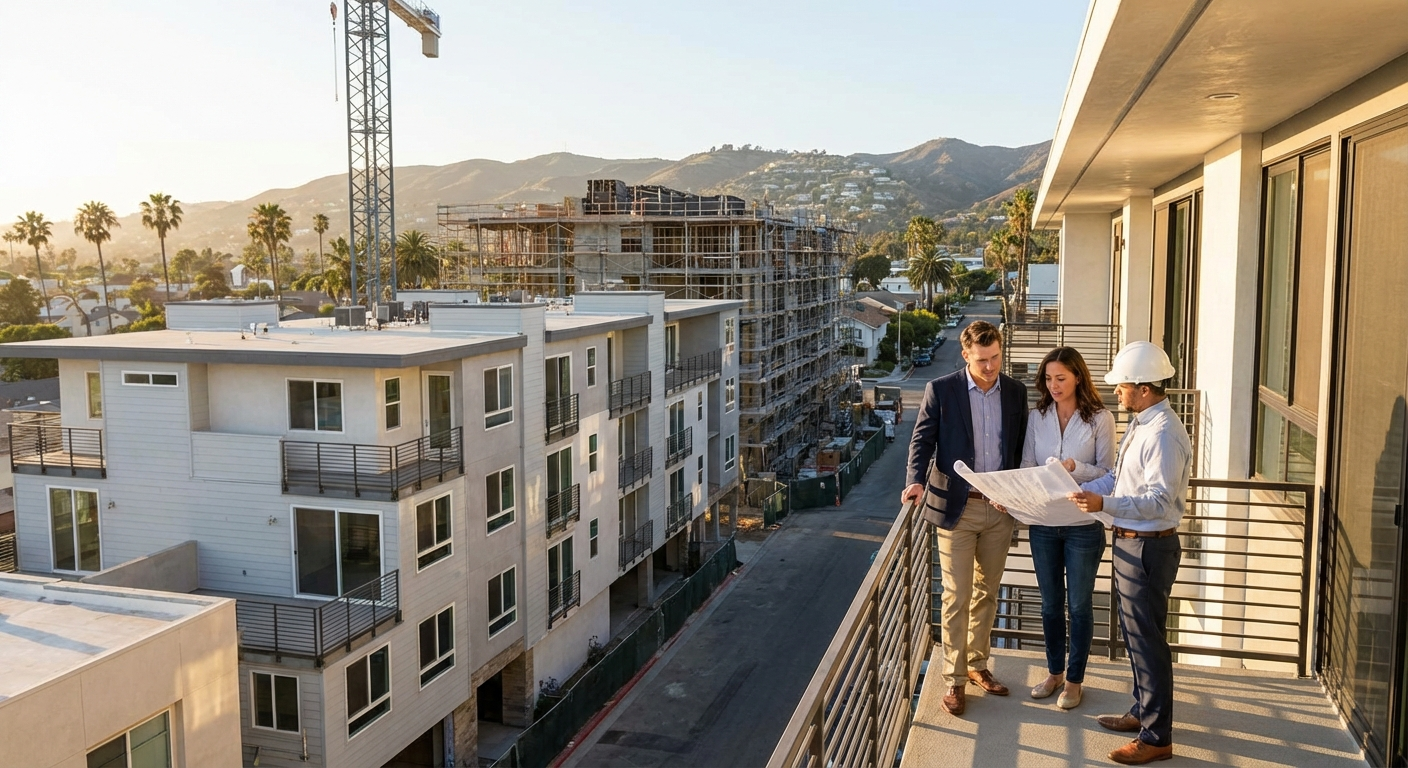
Don’t Rely Solely on the Builder’s Warranty
Many new construction condos come with a builder’s warranty. This is great. It protects you against certain defects in materials or workmanship for a set period. If your roof starts leaking because the builder used faulty shingles, that warranty is your friend.
But a warranty isn’t insurance. It won’t cover damage from a sudden fire, a burglar, or a flood caused by an outside event. It’s also typically limited to structural or system defects, not your personal belongings or liability. Maria and David’s warranty might cover a faulty appliance *if it was installed by the builder and fails within the warranty period*, but it won’t cover their other personal property if a fire starts *from* that faulty appliance. Big difference.
Finding the Right Fit for Your Fresh Start
So, what should Maria and David – or any new condo owner in California – do?
First, get a copy of your HOA’s master insurance policy. You’ll want to know exactly what kind it is: “bare walls-in” or “all-in.” Read the fine print. This tells you what your HO6 absolutely *must* cover. Don’t just assume.
Next, talk to an independent insurance agent. Someone like Karl Susman at California Condo Insurance. Independent agents aren’t tied to one specific company like State Farm or Farmers. They work with many different insurers and can shop around to find you the best coverage for your specific needs – even in today’s tricky California market. They understand the nuances of new construction, HOA policies, and the local risks, whether you’re in the Inland Empire or the bustling San Fernando Valley. Karl’s agency, CA License #0B75129, has helped countless Californians figure this stuff out. You can reach them at (877) 411-5200.
When you’re comparing policies, don’t just look at the premium. Check the deductibles – how much you pay out of pocket before insurance kicks in. Look at the coverage limits for personal property, dwelling improvements, loss assessment, and liability. A slightly higher premium for robust coverage often pays off big time in the long run.
For a new condo, consider extra coverage for things like water backup or sewer overflow, which isn’t always standard. And if you’ve got high-value items, like expensive jewelry or art, you might need a separate rider or endorsement.
Don’t let the excitement of a new home overshadow the practicalities of protecting it. New construction is fantastic, but smart insurance is what truly secures your investment and peace of mind.
Ready to protect your new California condo? Get a personalized quote today: Click here to get a quote!
Worried about what the California insurance market means for your new condo? An expert can help you understand your options. Contact us for a free consultation: Start your quote here.
Frequently Asked Questions About New Construction Condo Insurance in California
Q1: Does the builder’s warranty cover everything in my new condo?
A: No. A builder’s warranty typically covers defects in materials and workmanship for a specific period. It won’t cover damage from events like fire, theft, or natural disasters, nor will it cover your personal belongings or liability if someone is injured in your unit. You still need an HO6 condo insurance policy for comprehensive protection.
Q2: My new condo development has an HOA. Doesn’t their master policy cover my unit?
A: The HOA’s master policy covers the building’s structure and common areas. What it covers inside your unit depends on whether it’s a “bare walls-in” (or “studs-out”) policy or an “all-in” (or “all-inclusive”) policy. Even “all-in” typically only covers the original builder-grade finishes, not any upgrades you’ve made or your personal property. Your HO6 policy is essential to cover your personal belongings, upgrades, personal liability, and loss assessments.
Q3: Is new construction condo insurance more expensive in California right now?
A: The California insurance market has seen significant rate increases and availability challenges across the board in recent years. While new construction might sometimes have a slight advantage due to modern building codes, the overall market conditions – including rising rebuilding costs and natural disaster risks – can still lead to higher premiums for both HOA master policies and individual HO6 policies. Shopping with an independent agent like Karl Susman can help you find the best options.
Q4: What’s the biggest mistake new condo owners make regarding insurance?
A: The biggest mistake is assuming that because the condo is new, it needs less insurance, or that the HOA’s policy and the builder’s warranty cover everything. Many new owners overlook the need for robust personal property coverage, dwelling coverage for their upgrades, and loss assessment coverage, which can leave them vulnerable to significant out-of-pocket costs if something goes wrong.
This article is for informational purposes only and does not constitute financial advice.