
Myth #1: Condo Insurance and Homeowners Insurance are Basically the Same.
Honestly, this is where most people get tripped up. You own property in California, so you need insurance, right? The short answer is yes. The real answer is far more complicated, especially when you’re talking about a house versus a condo.
For most California homeowners, you own the land, the structure sitting on it, and everything inside that structure. Your homeowners insurance policy—often called an HO-3—is designed to protect all of that. It’s a big umbrella, covering damage to the actual house, other buildings on your property like a detached garage or shed, and your personal stuff. It also covers your backside if someone slips and falls on your walkway and decides to sue you.
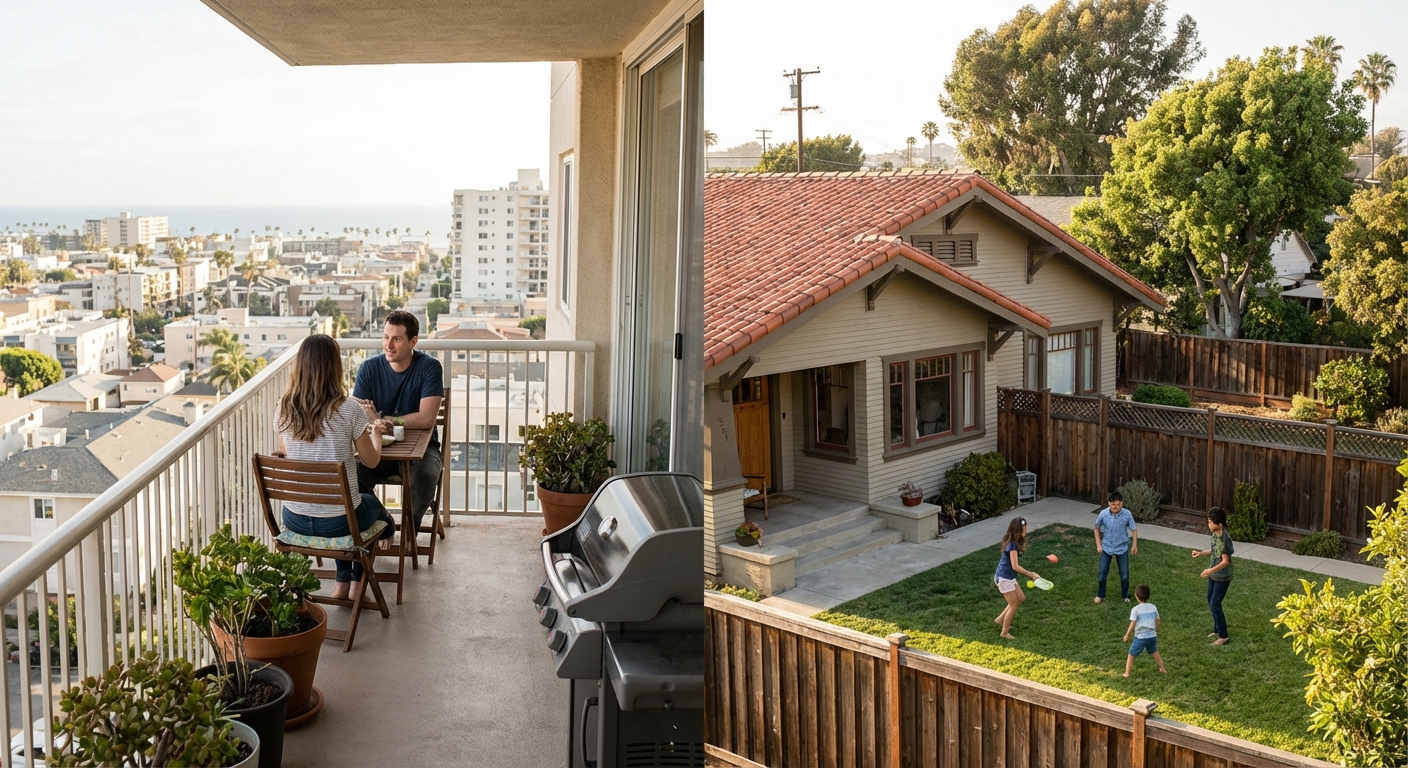
But here’s the thing. If you live in a condo in, say, Ventura County or downtown San Diego, you don’t own the whole building. You own the airspace within your unit, usually from the drywall in. You might own some fixtures, cabinets, and appliances. The building itself, the roof, the common areas like the pool or gym, even the exterior walls? Those belong to the Homeowners Association (HOA).
Which brings up something most people miss. Because the HOA owns the main structure, they have their own insurance policy, called a master policy. Your condo insurance policy—an HO-6—is designed to fill the gaps between what the master policy covers and what you’re personally responsible for. Big difference. You’re not insuring the entire building; you’re insuring your piece of it and your stuff.
What Does a Homeowners Policy Actually Cover in California?
Think of your standard California homeowners policy as having a few key parts. Each one plays a specific role in protecting your investment.
- Dwelling Coverage: This is the big one. It pays to repair or rebuild your actual house if it’s damaged by things like fire, windstorms, or vandalism. In California, with our wildfire risks, this coverage is front and center. Imagine your home in the Santa Monica Mountains after a brush fire – this is what helps you put it back together.
- Other Structures Coverage: Got a fence, a detached garage, or a shed out back? This covers damage to those.
- Personal Property Coverage: All your belongings inside the house – furniture, clothes, electronics, dishes. If someone breaks in and steals your TV, or if a pipe bursts and ruins your couch, this coverage kicks in.
- Loss of Use (Additional Living Expenses): If a covered disaster makes your home unlivable, this pays for temporary housing, food, and other expenses while your place is being repaired. Staying in a hotel in the Valley after a kitchen fire? This helps with that bill.
- Personal Liability Coverage: This is a huge one. If someone gets injured on your property and you’re found responsible, or if you accidentally cause damage to someone else’s property, this coverage can pay for legal fees, medical bills, and settlement costs.
- Medical Payments Coverage: Covers smaller medical bills for people injured on your property, regardless of who’s at fault. It’s usually a lower limit than liability.
In California, finding robust homeowners coverage has gotten tougher. Insurers like State Farm and Farmers have pulled back from new policies in certain high-risk areas. Premiums jumped 40% between 2022 and 2024 for many homeowners. If you’re in a wildfire zone, you might even find yourself relying on the California FAIR Plan, which is a last-resort option that offers basic coverage, but often not enough to fully rebuild.

So, What Exactly Does a Condo Policy (HO-6) Cover?
Now for the condo side of the coin. An HO-6 policy is tailored for that unique ownership structure. It’s not about the whole building, but your specific unit.
- Dwelling Coverage (Interior Unit): This covers the parts of your unit that you’re responsible for. That usually means your interior walls, floors, ceilings, built-in cabinets, fixtures, and any improvements you’ve made. If you upgraded your kitchen in your downtown LA condo, your HO-6 would cover those improvements if they’re damaged.
- Personal Property Coverage: Just like with homeowners insurance, this protects all your personal belongings inside your unit – your furniture, clothes, electronics, you name it.
- Loss of Use: Again, if your condo becomes unlivable due to a covered loss, this pays for temporary living expenses.
- Personal Liability Coverage: This protects you if someone gets hurt inside your unit or if you accidentally cause damage to a neighbor’s unit or common area.
- Loss Assessment Coverage: This is a big one for condo owners. If the HOA’s master policy has a high deductible, or if a major repair (like a new roof for the whole building) exceeds the master policy’s limits, the HOA might levy a special “assessment” against all unit owners. Your loss assessment coverage can help pay your portion of that bill.
Living in a high-rise in San Francisco or a townhouse in Orange County means sharing walls and common infrastructure. If a pipe bursts in the unit above yours, or a fire starts in a neighbor’s place, the damage can spread quickly. Your HO-6 is your personal shield in these shared living situations.
The HOA Master Policy: Your Condo’s Silent Partner (and Why it Matters to You)
Every condo association has a master insurance policy. This policy covers the common elements of the building and property. But here’s where it gets interesting: master policies aren’t all created equal.
Some are “bare walls-in” policies. These cover the building structure, roof, and common areas, but leave everything from your interior drywall on in to you. Other policies are “all-in” or “single entity,” meaning they cover more of the interior, sometimes even standard fixtures within your unit. You need to know which type your HOA has because it directly impacts how much coverage you need on your personal HO-6 policy.
But wait — even with an “all-in” master policy, you still need your own HO-6. Why? Because the master policy has a deductible. A big one, sometimes $25,000 or even $50,000. If a fire causes $30,000 in damage to your unit, and the master policy has a $25,000 deductible, the HOA might pass that deductible cost onto the affected unit owners. Your HO-6’s loss assessment coverage is what saves you from that huge out-of-pocket expense.
Which brings up something most people miss. The HOA’s policy might not be enough to cover a catastrophic loss for the entire building. If a major earthquake rattles the Inland Empire and severely damages your condo complex, the HOA’s master policy limits could be exhausted. When that happens, the HOA can assess each unit owner for their share of the uncovered costs. Again, loss assessment coverage on your HO-6 is your best friend here.
Why California’s Insurance Market is a Different Beast Entirely
California isn’t just another state when it comes to insurance. We’ve got unique challenges that make coverage more complex and often more expensive.
Wildfires are, frankly, a constant threat. From the hills of Malibu to the forests near Lake Tahoe, fires like the January 2025 Los Angeles fires or the devastating Paradise fire show how quickly homes can be lost. This risk has led many major insurers to pull back from offering new policies or renewing existing ones in areas deemed high-risk. If you live in a canyon in Orange County, you know this struggle firsthand.
Then there are earthquakes. While standard homeowners and condo policies don’t cover earthquake damage, it’s a constant consideration for any California property owner. Most people buy separate earthquake insurance, often from the California Earthquake Authority (CEA).
The insurance situation here is, frankly, a mess. Prop 103, passed in 1988, gives the Insurance Commissioner power to approve rate hikes. This was meant to protect consumers, but some insurers argue it makes it hard to charge enough to cover actual risks, especially with rising rebuilding costs and climate change impacts. The result? Fewer choices, higher prices, and more people getting shunted to the FAIR Plan, which, again, is a bare-bones policy.
This affects both homeowners and condo owners. If you’re a homeowner in a wildfire-prone area, getting decent coverage is a battle. If you’re a condo owner, your HOA might struggle to find affordable master policy coverage, leading to higher HOA dues or bigger loss assessments down the line.
Don’t Get Caught Off Guard: Key Differences to Watch For
Understanding the nuances between homeowners and condo insurance can save you a ton of grief and money.
Deductibles Aren’t Always Simple.
For a homeowner, your deductible is usually straightforward: a fixed dollar amount, say $1,000 or $2,500, that you pay out of pocket before your insurer kicks in. For condo owners, it’s more complex. You have your own deductible on your HO-6 policy. But you also need to consider the HOA master policy’s deductible, which, as we discussed, can be passed on to you through a loss assessment. It’s like a double-whammy waiting to happen.
Understanding “Loss Assessment” is a Must.
This isn’t a factor for single-family homeowners. But for condo owners, it’s absolutely critical. If the HOA’s master policy isn’t enough, or if a big deductible is applied, the HOA can “assess” each unit owner for a portion of the costs. This can be thousands, even tens of thousands of dollars. Your HO-6 policy needs to have enough loss assessment coverage to protect you from these unexpected bills. Many people only carry $10,000 in loss assessment coverage, but what if your HOA’s deductible is $50,000? You’d be on the hook for $40,000.
Liability Coverage: Same Name, Different Context.
While both policies have personal liability, the scope changes. For homeowners, it covers your entire property. For condo owners, it covers inside your unit and potentially your share of common areas if you’re deemed responsible for an incident there. Say you leave a water faucet running and it floods the unit below you and causes damage to the common hallway; your condo liability might kick in.
Rebuilding Costs vs. Interior Repair Costs.
A homeowner’s dwelling coverage aims to rebuild the entire house from the ground up. That’s a huge cost. For a condo owner, your dwelling coverage is only for the interior of your unit – the walls, floors, fixtures. It’s a much smaller, but still significant, amount. Don’t underestimate what it costs to replace a kitchen or two bathrooms in your condo after a fire.
Confused yet? You wouldn’t be the first. Finding the right coverage in California takes some real digging. To get a handle on your specific needs, it’s smart to talk to someone who knows the California market inside and out. Get a California Condo Insurance Quote.
What About Renters Insurance? (A Quick Detour)
Just to round things out, renters insurance is the simplest of the three. If you’re renting a house or a condo, you don’t own the structure. So, you don’t need to insure it. Renters insurance primarily covers your personal belongings from perils like fire or theft, and it also includes personal liability coverage if someone gets hurt in your rented space. It’s often very affordable, and frankly, a no-brainer for anyone renting in California.
The Smart Play? Talk to a California Pro.
Trying to figure out the right insurance for your California property can feel like navigating a maze blindfolded. You’ve got wildfires, earthquakes, the FAIR Plan, shifting insurer policies, and the complexities of HOA master policies. It’s not something you want to guess about.
This is where an independent insurance agent, someone like Karl Susman of California Condo Insurance, comes in handy. Karl and his team specialize in California insurance, and they’re not tied to just one company. They can shop around with multiple insurers to find a policy that fits your unique situation, whether you’re a homeowner in the Inland Empire or a condo owner in downtown Sacramento. They understand the quirks of the California market, from Prop 103 to the latest changes in wildfire risk assessments.
Don’t just grab the cheapest policy online without understanding what it actually covers – or, more importantly, what it *doesn’t* cover. A cheap policy that leaves you exposed to a $50,000 loss assessment isn’t really cheap at all. You need someone who speaks fluent California insurance. Karl Susman, California Condo Insurance, CA License #0B75129, phone (877) 411-5200, can help you make sense of it all.
Ready to get a clear picture of your insurance options? Get a California Condo Insurance Quote Today.
Frequently Asked Questions About California Home and Condo Insurance
Do I need earthquake insurance for my condo?
Yes, absolutely. Standard condo insurance (HO-6) policies do not cover earthquake damage, just like homeowners policies don’t. Given California’s seismic activity, it’s a smart idea for any property owner to consider a separate earthquake policy, often through the California Earthquake Authority (CEA).
What if my HOA’s master policy isn’t enough?
That’s a very real concern. If the HOA’s master policy limits are exhausted after a major event, or if the deductible is too high, the HOA can levy a “loss assessment” against all unit owners. Your personal HO-6 policy needs to include enough loss assessment coverage to protect you from paying those costs out of your own pocket.
Can I get homeowners insurance if I live in a high wildfire risk area?
It’s getting harder, but yes. Many traditional insurers have pulled back from these areas. You might need to work with an independent agent like Karl Susman who can access specialty carriers, or you might find yourself on the California FAIR Plan, which provides basic fire coverage as a last resort. Just know that FAIR Plan coverage is often limited and you’ll typically need to buy a separate “Difference in Conditions” policy to get broader coverage.
Is personal liability coverage really that important?
Extremely. It protects your assets if you’re sued because someone gets injured on your property or you accidentally cause damage to someone else’s property. Legal fees and settlement costs can be astronomical, easily reaching hundreds of thousands or even millions of dollars. Don’t skimp on liability coverage.
Does my condo insurance cover my storage unit?
Usually, yes. Most HO-6 policies extend personal property coverage to belongings stored off-premises, including in a storage unit. There might be specific limits, though, so it’s always a good idea to check your policy or ask your agent.
This article is for informational purposes only and does not constitute financial advice.